
Where Belgrade Begins
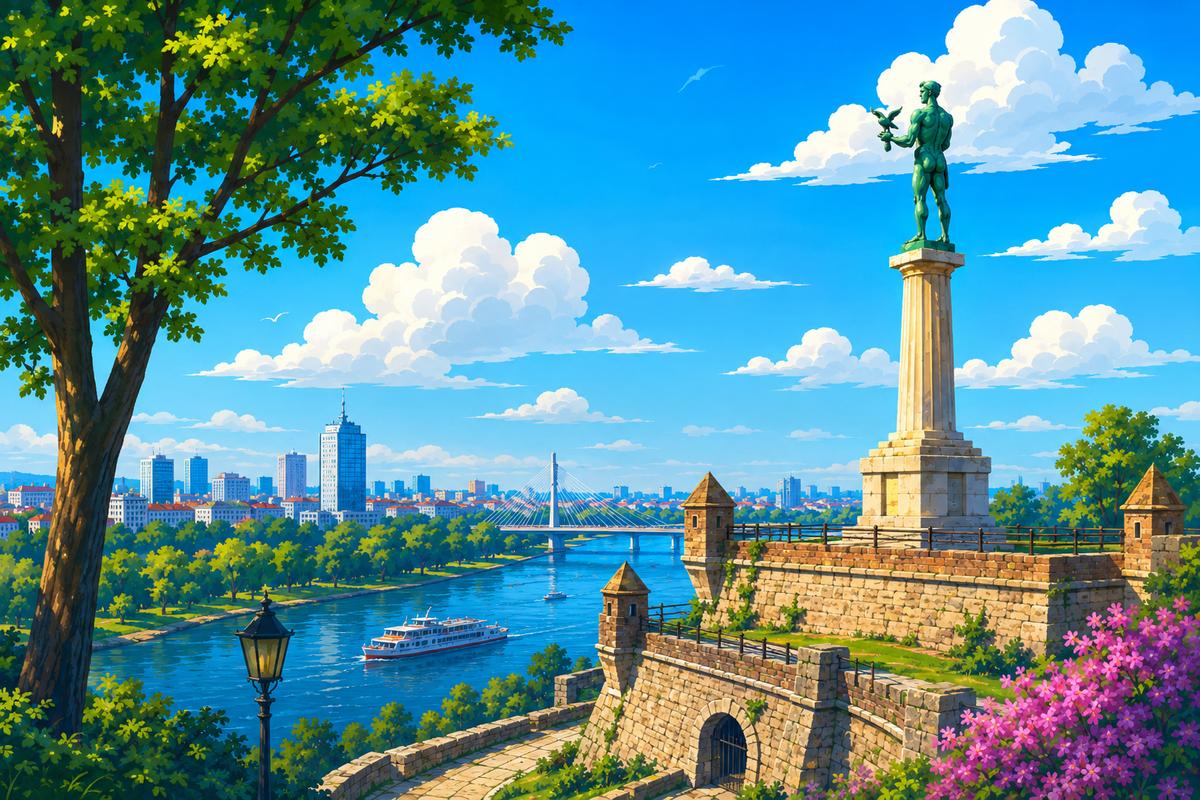
Belgrade Fortress occupies a commanding ridge above the confluence of the Sava and Danube. This position explains much of the city's history. Whoever controlled the ridge could watch the river routes and the plains stretching north and west, so the site attracted settlement from prehistoric times and later became a strategic military center.
Today, visitors encounter a very different atmosphere. The fortress walls, gates, monuments and archaeological remains are surrounded by Kalemegdan Park, a broad green space used for walking, sightseeing, cultural events and recreation. The fortress and park form a single historic complex at the edge of Belgrade's old center.
More Than Two Thousand Years of History
Archaeological evidence shows that the strategic ridge was inhabited long before the medieval city appeared. Through the centuries, the settlement developed under different rulers and empires, shaped by its position between Central Europe and the Balkans.
A decisive chapter came in 1404, when Despot Stefan Lazarević made Belgrade the capital of the Serbian state. The city was rebuilt and fortified, with Upper and Lower Town taking clearer form. Under his rule, Belgrade became an important military, economic and cultural center.
The fortress later passed through Hungarian, Ottoman and Habsburg control and was repeatedly attacked, rebuilt and expanded. In 1521, Sultan Suleiman the Magnificent captured Belgrade. The Ottoman period also gave Kalemegdan its name, commonly explained through the Turkish words kale, meaning fortress, and megdan, meaning field or battlefield.
Another symbolic moment came in 1867, when the Ottoman commander handed the keys of Belgrade to Prince Mihailo Obrenović. After the military importance of the fortress declined, the surrounding field began its transformation into a public park. Landscaping works started in 1869, and the park gradually acquired the form visitors recognize today.
Inside Belgrade Fortress
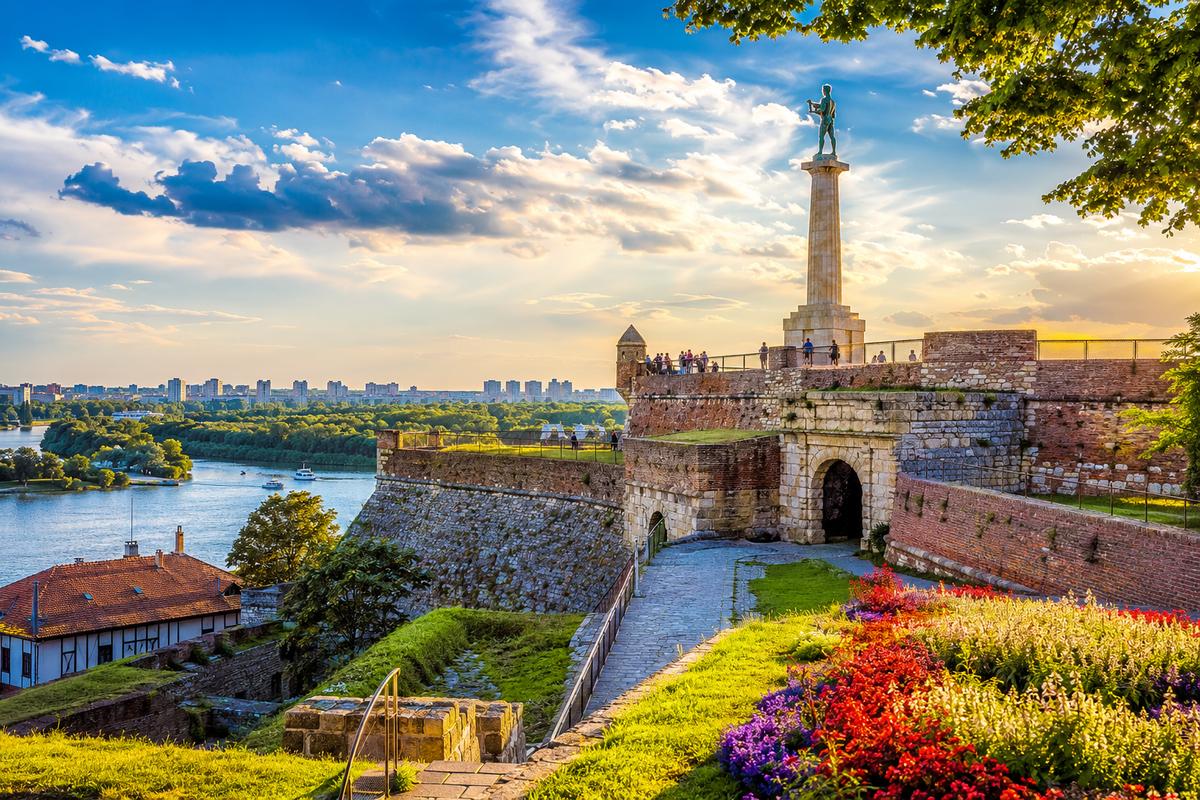
The surviving complex contains elements from different periods, with medieval structures existing alongside later Baroque fortifications. The historic area is traditionally divided into Upper Town and Lower Town, each revealing a different relationship with the rivers and the surrounding city.
Walking through the fortress is less like visiting a single preserved building and more like moving through layers of urban history. Gates, walls, towers, military structures, archaeological remains and monuments appear across a broad open landscape.
The Victor Monument
The Victor, known in Serbian as Pobednik, stands above the rivers and has become one of the most recognizable symbols of Belgrade. The monument and the nearby viewpoints are among the best places to understand the geography of the capital, especially the dramatic meeting of the Sava and Danube below.
Museums and Cultural Spaces
The wider Kalemegdan complex includes the Military Museum, cultural and exhibition spaces, and historic structures adapted for contemporary use. Serbia's national tourism organization also highlights the art pavilion, music pavilion, zoo and former military buildings now used for public attractions.
Kalemegdan Park
Kalemegdan is now one of Belgrade's most popular places for walking and relaxing. Its paths, lawns, trees, terraces and viewpoints soften the military character of the old fortress and make the area equally attractive to local residents and visitors.
The park's development accelerated after the fortress lost its military role. Paths and trees were introduced in the late nineteenth century, followed by monumental staircases and promenades in the early twentieth century. Between the world wars, the park took on much of its present appearance.
Where the Sava Meets the Danube
The panoramic view is one of the strongest reasons to visit. From the fortress ridge, the city opens toward the confluence of two major European rivers. The National Tourism Organisation of Serbia specifically promotes the view from Kalemegdan and describes sunset over the joining of the Sava and Danube as one of Belgrade's signature experiences.
For photography, the late afternoon and early evening are especially rewarding. The changing light reveals the river channels, bridges, New Belgrade skyline and the broad green spaces around the confluence.
What to See Nearby
Kalemegdan sits directly beside Stari Grad, the historic center of Belgrade. From the park, it is easy to continue on foot toward Knez Mihailova Street, Cathedral Church, Republic Square and the old bohemian quarter of Skadarlija.
- Knez Mihailova Street: Belgrade's central pedestrian street leading directly toward Kalemegdan.
- Stari Grad: the old urban core with historic buildings, museums, restaurants and cultural institutions.
- Skadarlija: a traditional quarter known for restaurants, music and old Belgrade atmosphere.
- Riverfront: routes below the fortress offer a completely different perspective of the walls and the rivers.
How to Visit
Allow at least two hours for a first visit, and more if you want to enter museums, explore both Upper and Lower Town or continue into the neighboring historic center. Comfortable walking shoes are useful because the complex is extensive and includes slopes, stone surfaces and stairways.
Early morning is quieter, while late afternoon offers warmer light and stronger views toward the rivers. If your schedule allows, arrive before sunset and stay until the city lights begin to appear.
Why Kalemegdan Matters
Belgrade is a city defined by movement, rebuilding and the meeting of different cultural worlds. Kalemegdan makes that story visible in one place. The ancient ridge, medieval walls, Ottoman and Habsburg layers, nineteenth-century park and modern city views all overlap here.
For a first-time visitor, this is the natural starting point for understanding Belgrade. The fortress explains why the city stands where it does, while the park shows how a former military frontier became one of the capital's most open and welcoming public spaces.
← Back to Home Page