A City Beside the Danube
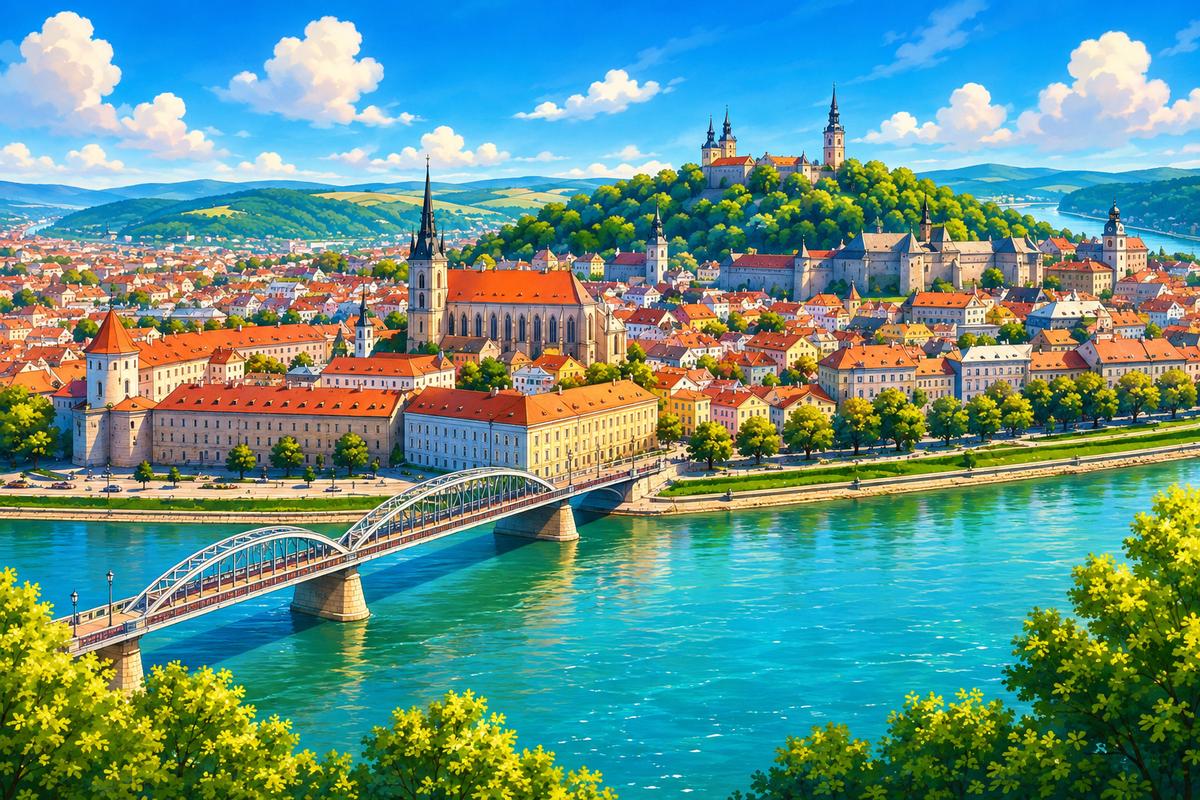
Novi Sad developed on the left bank of the Danube, facing the older fortified settlement of Petrovaradin on the opposite side. The river is central to the geography of the city, but it is the contrast between the two banks that gives Novi Sad much of its character: the relatively flat urban centre on one side and the fortress rising dramatically above the water on the other.
Novi Sad is often called the Serbian Athens, a name connected with its importance to Serbian cultural and intellectual life. The official City of Novi Sad presentation describes how the city rebuilt after the destruction of 1848-49 and developed in the second half of the nineteenth century into a major cultural centre.
From a Frontier City to Serbian Athens
From its beginnings, Novi Sad developed as a multiethnic city. The official city history lists Serbs alongside Germans, Hungarians, Croats, Slovaks, Ruthenians, Greeks, Jews, Armenians, Romanians, Roma and other communities. From 1748 the city had the status and institutions of a free royal city, a turning point in its civic development.
The revolutions of 1848-49 brought severe destruction, but the city was rebuilt. During the nineteenth century, cultural institutions and intellectual life strengthened Novi Sad's reputation as Serbian Athens. That cultural identity remains a visible part of the city's public image today.
Petrovaradin Fortress
Across the Danube stands the monument that dominates almost every classic view of Novi Sad. The present Petrovaradin Fortress was built between 1692 and 1780 under the Habsburg Monarchy as a major defensive complex on its southern frontier. Novi Sad's tourism organisation describes the fortress as one of the best preserved European fortifications and a defining landmark of the city.
The fortress complex includes the Upper Fortress and the Lower Town, or Suburbium. Its location on Petrovaradin Rock above the Danube explains its strategic importance: the elevated position provided control over the river and the approaches to the fortress.
The Clock Tower
The Clock Tower on the Upper Fortress is Petrovaradin's most recognisable feature. Its clock face reverses what visitors normally expect: the large hand indicates the hours and the small hand indicates the minutes. The Novi Sad Tourism Organisation explains that the arrangement made the hour easier to read from the town and from ships on the Danube.
The tower stands beside one of the fortress's strongest viewpoints. From the plateau, the Danube stretches below while central Novi Sad occupies the opposite bank, making the relationship between city, river and fortress immediately clear.
Beneath the Fortress
Much of Petrovaradin's military engineering is hidden underground. Beneath the fortifications lies a four-level system of military galleries extending for about 16 kilometres. The City Museum of Novi Sad describes the underground network as a defensive system of battle lines, communication passages, barricades and mine galleries.
Visitors do not have unrestricted access to the entire network. The tourism organisation and City Museum state that only a portion of the galleries is open to visitors with professional guidance, making the museum the correct place to check current visiting arrangements.
The Lower Town and Suburbium
At the foot of the Upper Fortress lies the Suburbium, the historic lower town of Petrovaradin. Here the atmosphere changes from open bastions and defensive earthworks to a compact urban setting of streets, military buildings, churches and Baroque architecture.
Important landmarks in and around the lower fortress include the Roman Catholic Church of Saint George and the Belgrade Gate. The area also received substantial restoration connected with Novi Sad's European Capital of Culture programme.
The Historic Centre of Novi Sad
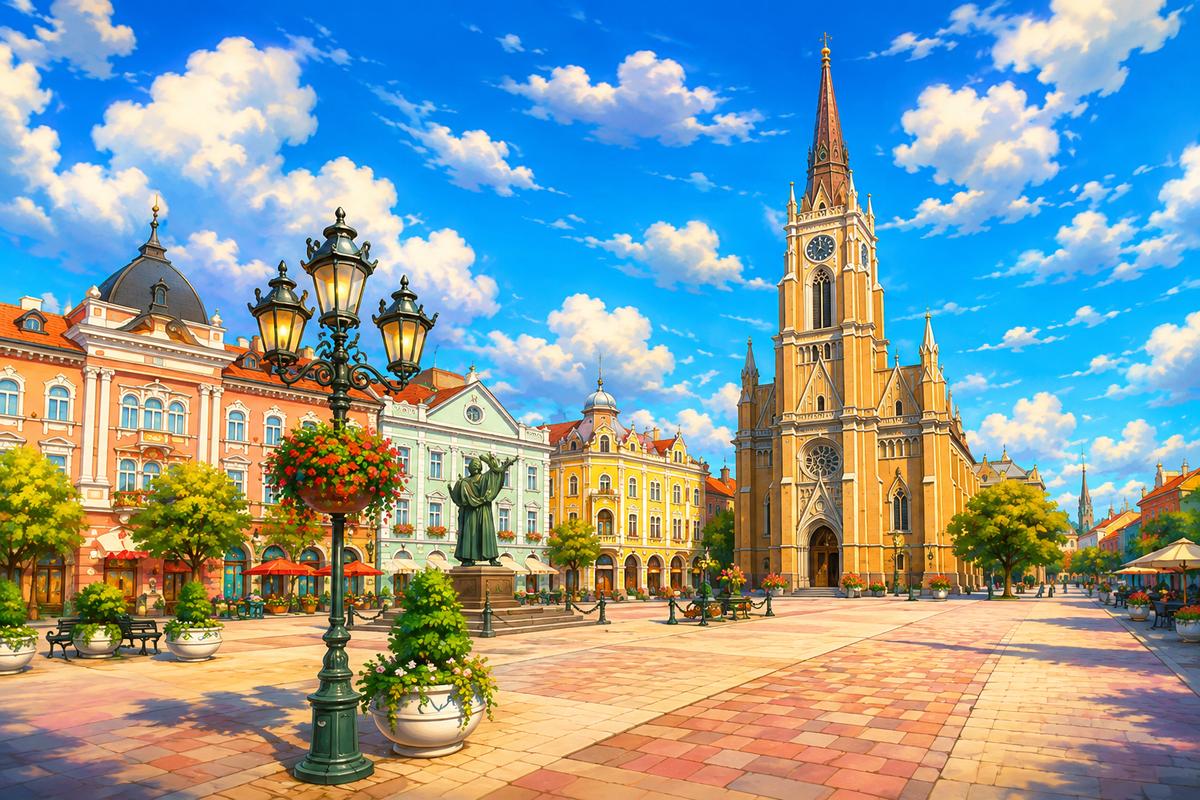
Cross the Danube and the character of the city changes quickly. The central part of Novi Sad is defined by pedestrian streets, squares, churches, civic buildings, cafés, museums and galleries rather than fortifications.
This is a city that works especially well on foot. The centre is compact enough for visitors to move naturally between its main public spaces, while the river and Petrovaradin remain close enough to form part of the same day of exploration.
Culture in the City
Culture occupies an unusually visible place in Novi Sad's identity. The city's long-standing cultural reputation was reinforced when Novi Sad became European Capital of Culture in 2022. The official Novi Sad 2022 programme records investment in new and renovated cultural spaces and restoration work in the Suburbium of Petrovaradin Fortress.
Petrovaradin Fortress itself demonstrates the transition from military infrastructure to cultural space. Today the complex contains the City Museum, artists' studios, galleries, Atelier 61 and other cultural uses.
EXIT and the Modern Fortress
Petrovaradin Fortress is also internationally known as the home of the EXIT music festival. The festival's use of the historic bastions and open spaces is one of the clearest examples of how the fortress continues to function as part of the living city rather than only as a preserved monument.
Along the Danube
The Danube is not simply scenery in Novi Sad. It separates and connects the city's two most recognisable historic areas. From Petrovaradin, the river provides the broad foreground to views of Novi Sad. From the city side, the fortress dominates the opposite bank.
The river also shapes recreation and everyday life. Novi Sad's tourism organisations highlight the Danube riverfront and Štrand beach as important parts of the city's outdoor character.
Beyond the Centre
South of Novi Sad rises Fruška Gora, an area associated with forests, walking routes, monasteries and vineyards. The Novi Sad Tourism Organisation presents the city together with the Danube, Fruška Gora and the surrounding Vojvodina landscape as part of a broader destination.
This makes Novi Sad useful as more than a one-day city stop. The historic centre and fortress can form the core of a visit, while the nearby countryside provides a very different second layer.
How to Explore Novi Sad
A logical first visit begins in the historic centre, continues toward the Danube and then crosses to Petrovaradin. Walking through the Lower Town before climbing to the Upper Fortress gives more context to the military complex above.
Once at the top, the Clock Tower, viewpoints, City Museum and fortress grounds can be explored before returning toward the city centre. Visitors interested in the underground galleries should check the City Museum's current guided-tour arrangements in advance.
Why Novi Sad Matters
Novi Sad works because its major attractions do not feel disconnected. The old city, the Danube and Petrovaradin Fortress are parts of the same landscape. The fortress explains the strategic importance of this section of the river. The historic centre reflects the commercial and multicultural city that developed nearby. Cultural institutions explain why Novi Sad became known as Serbian Athens.
For a first-time visitor, Novi Sad offers something different from Belgrade. It is smaller in scale, easy to experience on foot and visually organised around the relationship between the river and fortress. From the terrace at Petrovaradin, looking across the Danube toward the city, that relationship becomes obvious: Novi Sad and Petrovaradin are not two separate attractions. Together, they are the story of the city.
← Back to Home Page