
Where the Forest Takes Over
Tara lies in western Serbia, close to the Drina River and the border with Bosnia and Herzegovina. The protected area includes much of the Tara and Zvijezda mountain ranges, and the park has been under state protection since 1981. The landscape is dominated by forest, with ridges, limestone cliffs, ravines, streams and high plateaus breaking up the green.
That density of forest is what gives Tara its atmosphere. Even when you are driving between the main visitor areas, the mountain rarely feels open or exposed. Roads slip between dark spruce and fir, meadows appear without warning, and viewpoints often arrive at the end of a walk rather than beside a busy promenade. It feels less like a single attraction and more like a large natural world with many separate entrances.
The Serbian Spruce
Tara's signature tree is the Serbian spruce, Picea omorika, known locally as Pančić's spruce. The species survived in the canyons and gorges of the middle Drina region through the last Ice Age and is now one of the park's most important natural symbols. Its narrow crown and elegant shape make it easy to recognize once you know what you are looking for.
The tree is named after the Serbian botanist Josif Pančić, who identified it in the nineteenth century. It is more than a botanical curiosity. The Serbian spruce is a reminder that Tara is not simply scenic countryside. The mountain preserves habitats with a history far older than the roads, villages and tourist facilities around them.
Banjska Stena and the Viewpoints
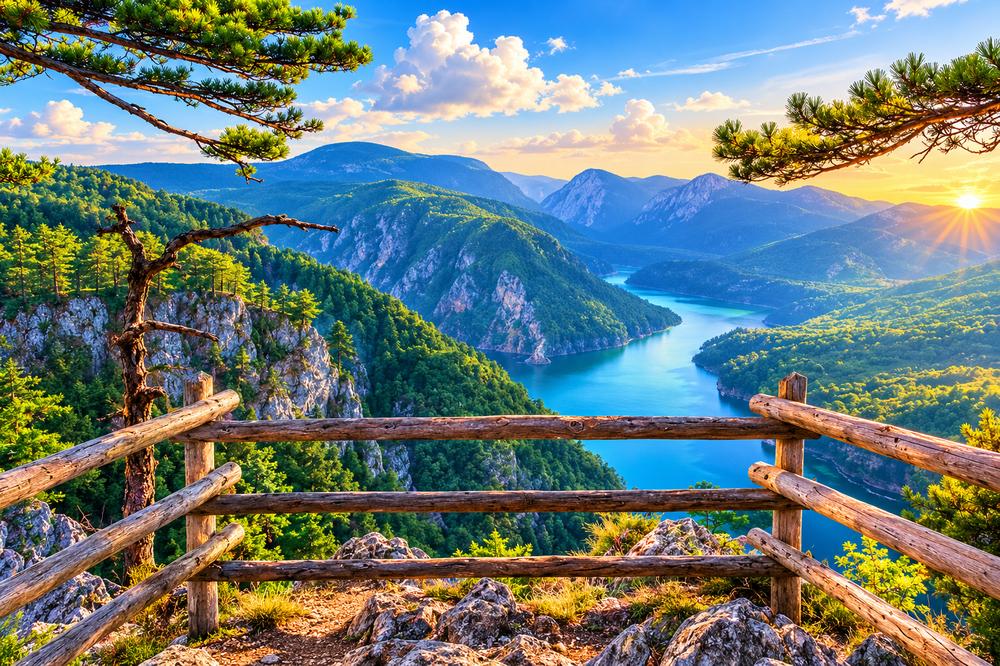
If Tara has one image that appears again and again in travel photographs, it is the view from Banjska Stena. From the cliff edge, the Drina Canyon and Lake Perućac spread out below in long green-blue curves, with forested slopes folding into the distance. The height gives the scene a scale that photographs rarely capture properly.
Banjska Stena is the best-known viewpoint, but it is not the only one. The park also highlights Bilješka Stena, Crnjeskovo, Osluša and Sjenič, among others. Each gives a slightly different version of Tara: river canyon, forest reserve, monastery landscape, open plateau or high watchtower. Local visitors often point out that the mountain rewards people who go beyond the single famous stop.
The Drina and Lake Perućac
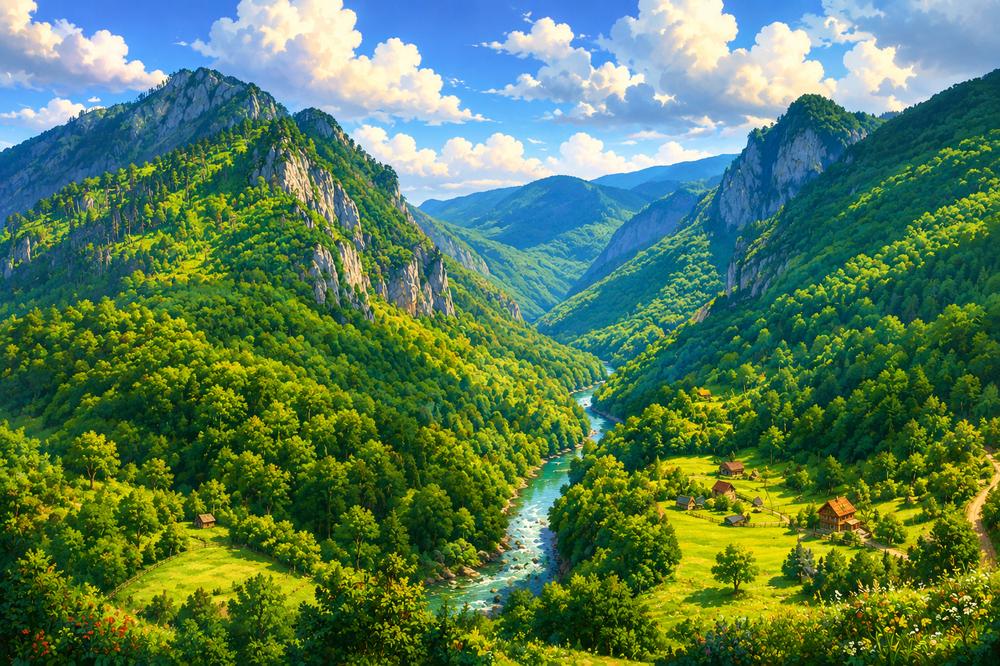
The Drina forms the dramatic western edge of the Tara landscape. From above, it looks calm and almost decorative, but the river is the reason the cliffs, reservoirs and steep valleys feel so powerful. Lake Perućac, created on the Drina, brings a softer element to the mountain and is one of the easiest places to combine water and forest in the same day.
The contrast matters. Tara is not only a mountain of trees. Its identity comes from the way forest and water constantly meet. At one moment you are walking through dense woodland with almost no horizon; later the landscape opens and the river appears hundreds of metres below. That shift is one of the reasons the park never feels visually repetitive.
Zaovine: A Quieter Side of Tara
Zaovine is one of the places that gives Tara a gentler rhythm. The lake, scattered houses, meadows and forested slopes create a landscape that feels more lived-in than the exposed viewpoints. It is a good place to slow down after a day of walking and a useful base for visitors who prefer cabins, rural accommodation and longer stays.
People who know the area often recommend Zaovine not as a quick photo stop but as somewhere to spend time. The scenery changes with weather and season, and even simple things - a road around the lake, a quiet meal, an evening walk - can become part of the experience. Tara makes more sense when at least part of the visit is unplanned.
A Mountain Shared With Wildlife
Tara supports a remarkable range of animal life. The park records dozens of mammal species and around 140 bird species, and it is especially important for the brown bear. Tara is home to the largest brown bear population in Serbia, and the national park has monitored the species for years.
That does not mean visitors should expect to see bears on an ordinary walk. In fact, most people will never encounter one. But knowing they are present changes the feeling of the forest. Tara is not a landscaped park designed around tourists. It remains a working ecosystem in which people are visitors.
Rača Monastery and the Human Story
Nature dominates Tara, but the mountain also has a cultural layer. Rača Monastery, founded in the medieval period and traditionally associated with King Dragutin, stands near the park and is one of the area's most important historic sites. Its history is connected with Serbian manuscript culture, learning and the preservation of religious tradition.
Visiting the monastery after a morning in the forest changes the tone of the day. Tara begins to feel less like an isolated wilderness and more like a landscape people have lived with for centuries. Villages, monasteries, old roads and mountain pastures are part of the same story as the spruce forests and canyon walls.
Walking Through Tara
Tara is best understood on foot. The National Tourism Organisation of Serbia describes an extensive network of marked mountain trails, including routes around Kaluđerske Bare, Mitrovac, Predov Krst, Rača and Banjska Stena. Some walks are short and accessible; others are better treated as full hiking days.
The most satisfying routes are often those that spend time inside the forest before arriving at a viewpoint. That sequence matters. If you drive close to every lookout, the landscape can become a collection of photographs. If you walk through the trees first, the sudden opening over the Drina feels earned.
How to Visit Tara National Park
Tara is large enough that planning around one base usually works better than trying to see everything in a single day. Mitrovac and Kaluđerske Bare are established visitor areas, while Zaovine is a strong choice for a quieter stay closer to the lakes and rural landscape. Bajina Bašta is the main town below the mountain and a practical gateway for supplies and onward travel.
A car gives the greatest flexibility, but road conditions can vary, especially on smaller mountain roads and approaches to viewpoints. Weather can also change quickly. Before longer walks, check current park information, trail conditions and any temporary restrictions. In summer, start popular viewpoints earlier if you want more quiet. In autumn, the forests are especially beautiful. Winter can be magical, but it turns simple routes into genuine mountain travel.
- Do not plan too much: Tara is better with time for detours, weather changes and unplanned stops.
- Wear proper footwear: even short viewpoint walks can become slippery after rain.
- Carry water and offline navigation: mobile coverage can be uneven in forested or remote areas.
- Respect protected zones: some reserves and habitats have stricter access rules.
- Check current park notices: trail access, fire restrictions and road conditions can change by season.
Why Tara Stays With You
Tara is memorable because it does not depend on one spectacular monument. The experience is built from repetition: forest, silence, bends in the road, cold air, water appearing through the trees, and viewpoints that suddenly make the mountain feel enormous. The famous places are worth seeing, but the spaces between them are just as important.
That is also what separates Tara from more developed mountain resorts. It still feels like a national park first and a tourist destination second. You can find accommodation, marked trails and well-known viewpoints, but the strongest impression is still the landscape itself.
For an international visitor, Tara reveals a side of Serbia that city trips easily miss. It is quieter, greener and more spacious. The country here is read through trees, water and distance rather than architecture. Stand above the Drina at Banjska Stena, then walk back into the forest, and the reason people return to Tara becomes easy to understand.
← Back to Home Page